The Wall After the Reading Is Done
You have read forty papers for an SCI submission. The figures are finished. Then you open the manuscript file and cannot write the first paragraph. Most papers die here: the material keeps piling up while the thread that was supposed to connect it gets fainter.

The obvious shortcut is to feed the pieces to GPT-6 one section at a time. It fills pages fast. It also produces a paper in which the research question, the evidence and the conclusion never quite agree with each other, and the rework that follows costs more than the time saved.
Below is the workflow we use instead: GPT-6 takes the SCI paper through five steps, each with one specific GPT-6 skill and one prompt you can paste. The first three build the spine of the paper. The last two polish it and get it out the door.
Part 1 — Build the Spine of the SCI Paper
Step 1: Pin the research question, then map the literature
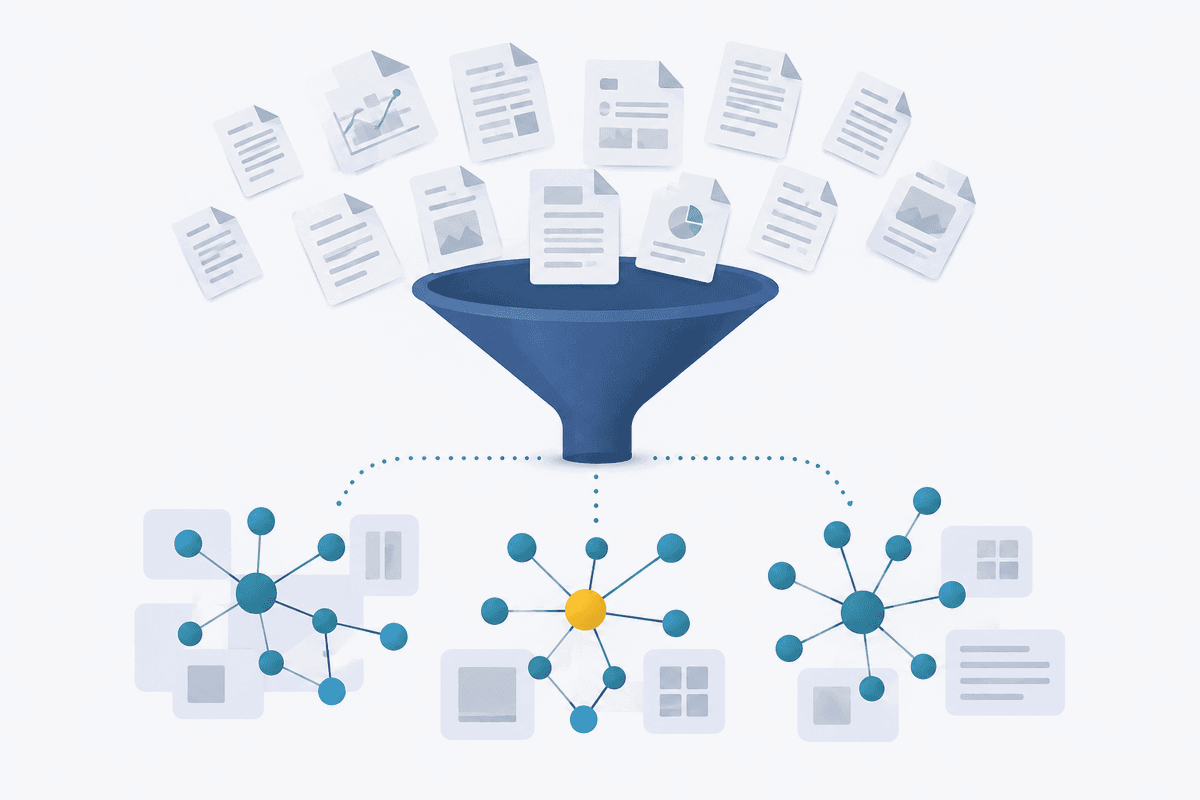
The first move of any project is to compress the research question into a sentence you can say in one breath. That sentence needs four things: the object of study, the setting, the method or mechanism, and the relationship or controversy you plan to resolve. Drop any one of them and you will stall around the third paragraph, because every source will feel relevant and none will feel central.
Once the sentence is fixed, search along three axes — core concepts, methods, and application scenarios. This is where a search skill earns its keep: keyword expansion, deduplication, and building a literature matrix from metadata and abstracts. What it cannot do is verify mechanisms, parameter values or effect sizes. Those live in the full text, and you still have to read it.
Skill: nature-academic-search — routes a query by discipline to PubMed, CrossRef, arXiv and Semantic Scholar, then deduplicates, validates citations and exports BibTeX/RIS. Chinese theses and journals still need CNKI or Wanfang separately.
Prompt:
Task: use nature-academic-search to build a structured literature map for the research question below.
Research question: [one sentence — object, setting, method, controversy]
Time window: [start year – end year]
Clusters that must be covered (three or more): [concept cluster / method cluster / application cluster]
Procedure: round 1 casts a wide net by concept; round 2 narrows by method; round 3 adds the contested papers. Merge duplicates across rounds, then group the results as "answers the question directly" / "supplies a method" / "supplies background".
Screening rule: screen on metadata and abstracts only. Mark any field that needs full-text verification — mechanism, parameters, effect size — as "to read". Do not write conclusions on my behalf.
Watch out: the size of the reading list says nothing about the quality of the review. Every time you read a paper, record which sub-question it supports in the matrix. Anything you cannot file, however relevant it looks, will end up dragging the argument sideways.
Step 2: Ask GPT-6 for a skeleton that plans but does not write

With the evidence matrix in hand, ask GPT-6 for a skeleton that plans and nothing else. A useful skeleton answers three questions for every section: which research question it serves, which piece of evidence backs which sentence, and where the boundary sits between reporting results and discussing them. It should also expose its own gaps. If the material cannot support a section that "every paper has", the honest move is to mark it evidence needed rather than paper over the hole with general knowledge.
Skill: Academic Paper Skills — its academic-paper-strategist module does four things: profiles the target venue, maps the gap in the literature, produces a detailed outline, and runs a reviewer-style check on it. The authors note that the skill was shaped mostly on philosophy and interdisciplinary papers, so for experimental medicine, engineering validation or clinical work you still need to add the methodological clauses and reporting standards your field expects.
Prompt:
Role: paper planner only. Do not draft any body text.
Inputs: research question = [one sentence]; study design = [experimental / observational / modelling / review / other]; core material = [evidence-matrix summary + methods notes + key results tables]; target journal or disciplinary convention = [fill in].
Task: produce a detailed IMRaD outline. For every subsection, fill in four fields — which research question it serves / which evidence entries it must cite / the inference boundary it must not cross / how it hands off to the next section.
Boundaries: if the material cannot support a section that is conventionally expected, mark it "evidence needed" explicitly. Do not fill gaps with general knowledge, and do not write any prose at this stage.
Watch out: the outline only settles whether the skeleton is right. Language, strength of argument and the tone of the conclusion are not this step's job. Push them into the planning stage and you get a table of contents that looks polished and hides the gaps.
Step 3: Let GPT-6 draft section by section, from evidence only
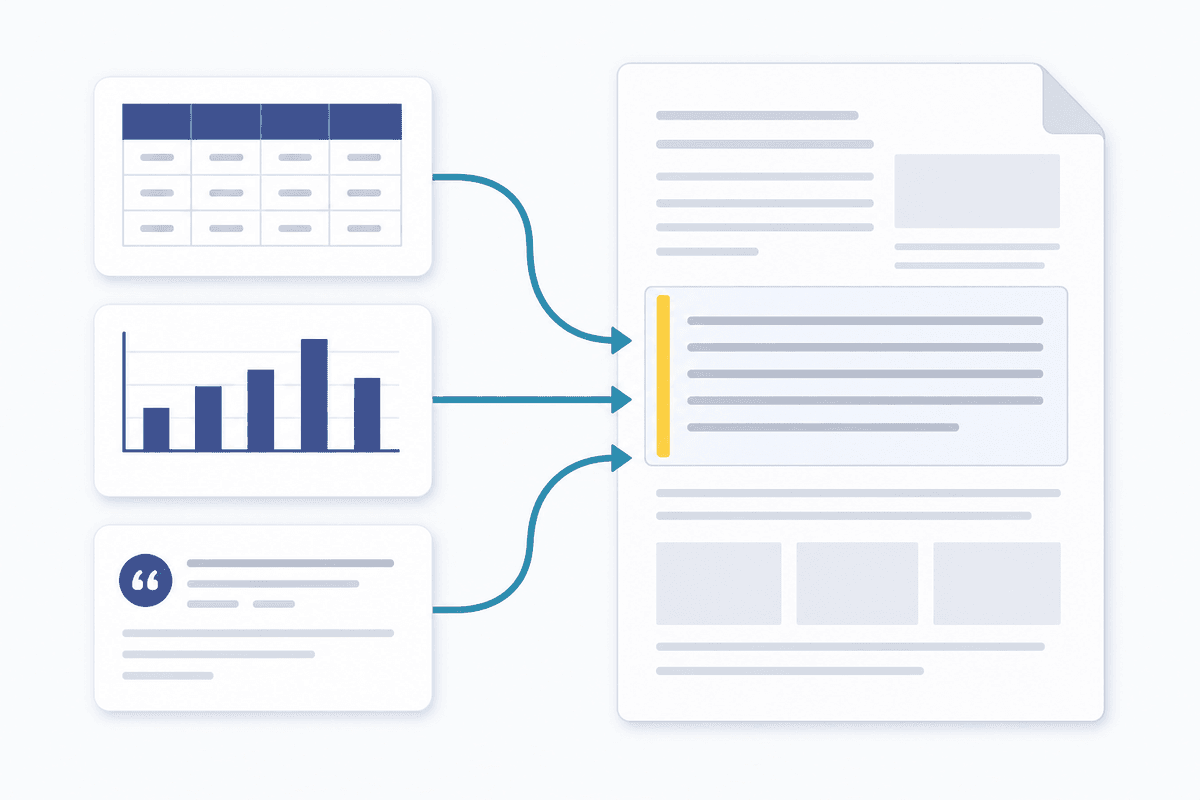
Drafting pays off most when you go one section at a time. The more concrete the input, the more traceable the output: a Methods section needs the real procedure, parameters and software versions; a Results section needs its tables, effect sizes and significance tests; a Discussion needs verified citations and explicit limits on what may be inferred. Asking for "the whole paper in one go" feels efficient, but it spreads five small holes across one large document where nobody can find them.
Skill: Scientific Agent Skills — enforces a strict provenance rule for every factual claim. It accepts only three kinds of input: material you supplied, search results verified through a trusted channel, and domain knowledge that carries no specific numbers. It also separates results obtained from results planned. A statement with no evidence behind it gets stopped at the gate: add evidence, rewrite, or delete — never patch the paragraph with a placeholder that looks finished.
Prompt:
Role: draft only the "[subsection name]" of [Methods / Results], strictly from the inputs below.
Available material: only the pasted content that follows — [methods log / parameters / tables / statistical output].
Procedure: step 1, list the facts this subsection will state, each tagged with its source (material page / table number / reference number); step 2, draft a first version of about [target word count] words from that fact list.
Style rules: Methods follow the real order of operations and keep software versions, thresholds and exclusion rules. Results report in the order "direction → effect size → interval → significance" and do not explain causes.
Placeholder rule: any missing field becomes [AUTHOR TO ADD: field]. Do not guess numbers or procedural steps.
Watch out: section-by-section does not mean fragment-by-fragment. After each section, go back to the spine and ask what question this section answers and which contribution it belongs to. A paragraph that has no home on the spine gets rewritten or cut, no matter how fluent it reads.
The Results section is also where the figures have to exist before the prose does — a paragraph that reports "direction → effect size → interval" is describing a plot. If the figure is still a sketch at this point, PaperBanana will turn a text description of it into a publication-ready figure in about a minute, so the draft and the figure grow together instead of the figure arriving last.
Part 2 — Polish the SCI Paper and Ship It
Step 4: Revise in three passes with GPT-6, one lens each

Revision works best as three separate passes with three separate targets. Pass one checks the argument: is the evidence chain unbroken, does any inference overreach? Pass two checks alignment: do the figures and methods match the text, is the evidence actually in the paragraph that claims it? Pass three unifies terminology, tense and register. Keeping the goals apart is far cheaper than chasing "final-draft feel" from sentence one.
Language is where a polishing skill is strongest: repeated phrasing, template wording, and a decent eye for structural breaks. Give GPT-6 one pass at a time and the results are stable.
Skill: Paper Polish Workflow — conservative by default. Pure grammar and fluency issues are fixed directly; anything that might change the scientific meaning is listed separately for you to decide. It will not turn a correlation into a cause on your behalf, and it will not invent numbers, mechanisms or sample sizes.
Prompt:
Task: light polish of the Discussion below.
Do not touch: existing data / citation numbers / hedging words / strength of conclusions — keep all of them exactly as written.
Priorities: split long sentences, remove repetition, unify terminology, remove non-native phrasing; delete exaggerated or template wording.
Red line: any edit that could change the scientific meaning must keep the original sentence and list the suggestion separately — no direct replacement. Do not add numbers, mechanisms or causal claims.
Text: [paste]
Watch out: a skill can flatten repetition and template phrasing. Strength of argument, inference boundaries and the stance of the conclusion remain yours. Think of polishing as "a tool straightens the sentences", not "a tool makes the academic judgment".
Step 5: Run one hard check before you submit

Three to five days before submission, run one full inspection from the argument down to figure quality. Fix the blockers first — structural misalignment, missing key citations, figures that have drifted from the text — and only then deal with wording and formatting.
Journal selection can start from a candidate list built on title, abstract, keywords and study type. But each journal's aims and scope, accepted article types, current quartile, review time and publication fee must be checked on the journal's own site or in an authoritative database, one by one.
Skill: venue-templates, part of Scientific Agent Skills — sits between choosing the journal and clicking submit. Once the target is fixed, it checks manuscript structure, layout and the attachment list against that venue's official template and submission requirements. Choosing the journal is still your job: shortlist with the publisher's own journal finder, let the tool check scope per journal, and hand it the final target to prepare the package.
Prompt:
Inputs, in this order: paper title / abstract / keywords / study type — [paste].
Step 1: infer the primary and secondary discipline from the inputs.
Step 2: propose five candidate journals, grouped as "reach 2 / match 2 / safe 1".
Step 3: for each journal, list —
  1. Aims & Scope match: quote the official wording and give the URL;
  2. accepted article types;
  3. current JCR / CAS quartile with the year;
  4. OA model and APC;
  5. publicly verifiable review time;
  6. risk notes (acceptance rate, contested topics, special policies).
Red line: any field that cannot be confirmed from an official or authoritative source is written as "unverified". Do not estimate acceptance rates.
Watch out: an "acceptance likelihood" from GPT-6 or any other tool is a statistical impression from its training data, not a submission outcome. Cross-check acceptance rates, review times and APCs against the journal site, Retraction Watch and LetPub before you rely on any of them. Whatever the tool cannot confirm stays marked unverified.
Split the Work, Then Let GPT-6 In
The hardest part of writing a paper is that literature review, framework design and sentence polishing all try to happen at the same time. Splitting them into steps shows you exactly where you are stuck, and it keeps you from handing the whole SCI manuscript to GPT-6 and hoping.
Fix the question first, collect the evidence, then build the argument. A rough first draft is fine. Each revision pass gets one job. Once the routine is yours, the skills above stop being shortcuts and start removing the meaningless rework — which is the only thing they were ever good at.
Where PaperBanana Fits
Every step of the GPT-6 workflow above is about words: finding them, arranging them, tightening them. The figure — the first thing a reviewer looks at — still has to be made, and it should be made at step 3, not the night before submission.
That is the part we build for. PaperBanana generates publication-ready academic figures from a text description, and can convert any figure into a fully editable SVG when a reviewer asks for one more label. If you are assembling a GPT-6 toolkit for research, our Paper Skills directory reviews the skills mentioned here and dozens more, with install commands and honest notes on what each one is good for.
Skills Mentioned in This Post
- nature-academic-search — multi-database literature search with deduplication and BibTeX/RIS export
- Academic Paper Skills — planning-only outlines with a reviewer-style check (GitHub)
- Scientific Agent Skills — provenance-bound drafting and venue templates (GitHub)
- Paper Polish Workflow — conservative, meaning-preserving language polish